National Education, Employability & EdTech Congress 2027

THEME: THE TECHNOLOGY, TALENT & INSTITUTIONAL REVOLUTION
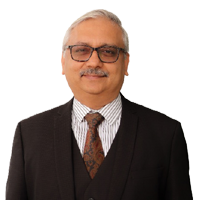
09:00 – 10:00 AM
Registration
10:10 – 10:15 AM
Opening Remarks
Speaker:
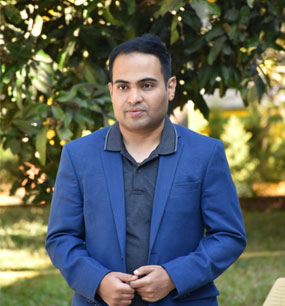
sachin
Sachin Marya
Editorial Director, Entrepreneur India
10:15 – 10:35 AM
Inaugural Keynote: India's Education Revolution: Building the Learning System of Tomorrow
  • Moving beyond enrolment and infrastructure towards quality, capability and meaningful learning outcomes.
  • Preparing India's young population for an economy shaped by AI, automation, climate change and technological disruption.
  • Ensuring technology improves teaching and learning rather than becoming an end in itself.
  • Mobilising public and private capital for institutions, teachers, infrastructure, research and innovation.
  • Building financially sustainable education models without compromising education's larger social responsibility.
  • Converting India's young population into a genuine demographic dividend through better education.
  • Creating an education system capable of supporting India's ambition to become a developed and globally competitive nation.
10:35 – 11:25 AM
SESSION 1 : AI in Education: Reimagining How We Teach, Learn & Assess
  • Moving beyond using AI as an add-on towards redesigning the learning experience around its capabilities.
  • Using AI to understand individual learning gaps and create customised learning pathways.
  • How technology can help teachers with lesson planning, content creation, feedback and classroom support.
  • Using AI to understand not just what students answer, but how they learn and where they struggle.
  • Can AI help India deliver high-quality, personalised learning to millions of students affordably?
  • Addressing privacy, bias, misinformation, academic integrity and the appropriate use of AI with children.
  • Moving beyond AI adoption to ask whether these technologies are actually producing better learning and better learners.
Speaker:
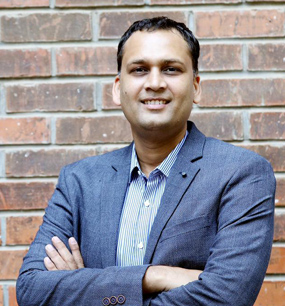
harish
Harish Sanduja
Director of Schools, Seth MR Jaipuria Group
dominic
Dominic Tomalin
Principal Director, Shrewsburrry International School, India
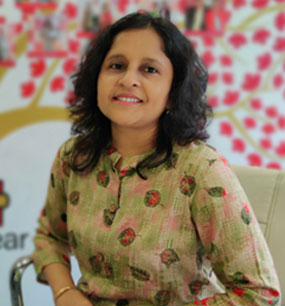
devika
Devika Nadig
Co-founder and Director, Shikshangan
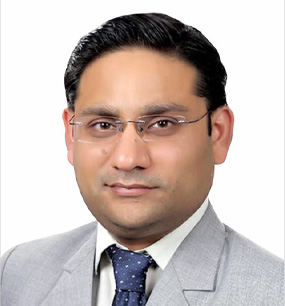
amol
Amol Arora
Director, Shemrock Group of Schools
11:25 – 11:45 AM
KEYNOTE 2 : The AI-Ready Learner: What Should Every Indian Student Know by 2030?
  • Understanding how AI works, where it can help and where it can mislead.
  • Teaching students to question machine-generated information rather than accepting it blindly.
  • Building creativity, empathy, communication and collaboration.
  • Preparing students to become effective human-AI collaborators.
  • Equipping young people for professions and industries that may barely exist today.
  • Developing responsible, ethical and informed users of emerging technologies.
  • Moving beyond marks towards curiosity, adaptability, problem-solving and lifelong learning.
Speaker:
anil
Dr. Anil Sahasrabudhe
Chairman, NAAC, Ex-Chairman, AICTE
11:45 AM – 12:35 PM
SESSION 2 : The Future of Skills: Building India's Workforce for Jobs That Don't Exist Yet
  • Why academic qualifications alone increasingly fail to guarantee workplace readiness.
  • Preparing talent for AI, robotics, cybersecurity, semiconductors, EVs, advanced manufacturing and green technologies.
  • Bringing employers into curriculum design, projects and practical training.
  • Making real-world exposure a meaningful part of education.
  • Building credible ways to demonstrate actual competencies.
  • Creating continuous learning pathways for the existing workforce.
  • Building a stronger bridge between what institutions teach and what India's economy needs.
Speaker:
biswajit
Dr. Biswajit Saha
Professor and Director, Skill Education, CBSE
amar
Dr. Amarendra Behera
Joint Director, CIET, NCERT
vivek
Vivek Agarwal
Co-founder and CEO, Liqvid e-Learning Services
payal
Payal Jindal Khanna
Associate Director & Head, Centre for Leadership Coaching | Assistant Professor Shoolini University, India
12:35 – 1:25 PM
SESSION 3
  • Transforming universities from degree providers into knowledge, innovation and talent ecosystems.
  • Connecting research with industry, entrepreneurship and real-world challenges.
  • Making employers active participants in curriculum, research and innovation.
  • Preparing students for problems that increasingly cross traditional academic boundaries.
  • Building Indian institutions that can attract students, researchers and faculty from around the world.
  • Balancing academic excellence, affordability, infrastructure and financial sustainability.
  • Producing not just graduates, but researchers, entrepreneurs, creators and future leaders.
Speaker:
deepu
Prof. Deepu Philip
Professor In Charge, Innovation, IIT-Kanpur
balvinder
Dr. Balvinder Shukla
VC, Amity University, NOIDA
akshay
Akshay Chaturvedi
CEO, Leverage Edu
nimay
Nimay Kalyani
Campus Director India, University of Wollongong (Australia)
ranjana
Prof. Ranjana Jha
VC, Indira Gandhi Delhi Technical University for Women
1:25 – 2:25 PM
Networking Lunch
2:25 – 3:15 PM
SESSION 4 : EdTech 3.0: Beyond Content, Apps & Test Preparation
  • Understanding what worked, what failed and what the industry must learn.
  • Moving beyond app downloads, watch time and user numbers towards measurable learning.
  • Adaptive learning, AI tutors, automated feedback and personalised education.
  • Combining technology with physical classrooms, teachers and institutional ecosystems.
  • Balancing affordability, learning impact, customer acquisition and profitability.
  • Helping schools and universities transform rather than simply selling technology to them.
  • Can India develop education technologies that can serve learners beyond its borders?
Speaker:
Vinay Maheshwari
Business Transformation & Scale Strategist
3:15 – 3:35 PM
KEYNOTE 3 : The Great Unbundling of Education: Degrees, Skills, Credentials & Lifelong Learning
  • Understanding whether degrees will remain the dominant currency of employability.
  • The emergence of shorter, stackable and industry-oriented qualifications.
  • Creating trusted systems for demonstrating capabilities beyond academic transcripts.
  • Education moving from a one-time investment to a continuous journey.
  • Companies increasingly becoming partners in defining and validating skills.
  • Allowing learners to combine university, online, vocational and workplace learning.
  • Ensuring flexibility and modularity do not come at the cost of intellectual rigour.
Speaker:
praveen
Praveen Kumar Rajbhar
Founder and CEO, Skilling You
tarun
Tarun Anand
Vice Chancellor, Universal Ai University
arpit
Arpit Mittal
Co-founder & CEO, SpeakX.AI
3:35 – 4:25 PM
SESSION 5 : Education Services 2.0: Building the Infrastructure behind Better Education
  • Understanding the growing universe of services that enables institutions to function better.
  • Curriculum, content, assessment, counselling and student-support solutions.
  • Helping institutions adopt and integrate new technologies effectively.
  • Using specialised service providers to improve institutional productivity and reduce costs.
  • Services increasingly determining how students interact with institutions beyond the classroom.
  • Opportunities emerging from international admissions, mobility and cross-border education.
  • How service providers can contribute directly to institutional quality and student outcomes.
Speaker:
prakash
Prof. Prakash Gopalan
President, NIIT University
4:25 – 5:15 PM
SESSION 6 : The Future of Learning Spaces: Designing the School & Campus of 2030
  • Moving from rows of desks towards flexible, collaborative learning environments.
  • Integrating connected infrastructure, data and digital systems into institutional operations.
  • Maker spaces, laboratories, innovation centres and project-based environments.
  • AR, VR and spatial technologies creating new forms of learning.
  • Making campuses accessible and welcoming to diverse learners.
  • Energy-efficient, climate-conscious and resource-efficient education infrastructure.
  • Asking not merely how a campus looks, but how its physical environment improves the learning experience.
Moderator:
renu
Dr. Renu Singh
Executive Director, Young Lives India
Speaker:
asllesha
Asllesha Thakur
CEO, Lead Education
prateek
Prateek Shukla
Co-founder and CEO, Masai
mayank
Mayank Pandey
Co-Founder & CFO, Just Procure
10:10 – 10:30 AM
KEYNOTE 1 : Education for Bharat: Taking Quality Learning beyond India's Metros
  • Moving the conversation beyond enrolment towards genuinely good education.
  • Understanding the enormous opportunity emerging in Tier-II, Tier-III and rural India.
  • Creating models that deliver quality without becoming unaffordable.
  • Building educational experiences that reflect India's linguistic diversity.
  • Using digital infrastructure to overcome geographic limitations.
  • Building capable schools and colleges rather than relying solely on centralised models.
  • Ensuring India's young population receives the capabilities required to participate in the future economy.
10:30 – 11:20 AM
SESSION 1 : Reinventing K-12: The School of 2030
  • Moving towards competencies, capabilities and holistic development.
  • AI literacy, financial literacy, entrepreneurship, climate awareness and life skills.
  • Exploring alternatives to an education system dominated by high-stakes examinations.
  • Giving children greater flexibility according to their abilities and interests.
  • Building a more informed and collaborative relationship with parents.
  • Integrating academics with sports, arts, innovation, wellbeing and social development.
  • What should a child experience between entering school and graduating into adulthood?
11:20 – 11:40 AM
KEYNOTE 2 : The First School of Life: Why Early Childhood Will Shape India's Future
  • Why early childhood has a profound impact on cognitive and emotional development.
  • Moving towards structured, holistic early learning.
  • Making curiosity and exploration central to early education.
  • Strengthening foundational literacy and communication.
  • Making families active partners in early development.
  • Establishing stronger standards for India's early-childhood ecosystem.
  • Why investing in the earliest years can create enormous social and economic value.
Speaker:
Amrita Burman
Director
Sunbeam Schools
Moderator :
sharanni
Sharani Ponguru
Director
The Narayana Group
11:40 AM – 12:30 PM
SESSION 2 : India's Preschool Opportunity: Scaling Quality in Early Childhood Education
  • The professionalisation of India's preschool sector.
  • Building preschool networks without compromising educational quality.
  • Designing developmentally appropriate learning experiences.
  • Strengthening the quality and training of early-years educators.
  • Why credibility and transparency are critical in the preschool market.
  • Understanding where digital tools can help—and where human interaction must remain primary.
  • Building viable preschool enterprises while keeping the child's development at the centre.
12:30 – 1:20 PM
SESSION 3 : Technical Education 2030: From Degrees to Industry-Ready Capability
  • Moving beyond outdated curricula and examination-driven learning.
  • Preparing talent for semiconductors, EVs, robotics, AI, aerospace and advanced manufacturing.
  • Expanding practical projects, laboratories and industry exposure.
  • Making employers active partners in technical education.
  • Turning technical institutions into centres of problem-solving and enterprise creation.
  • Improving the capabilities of Tier-II and Tier-III technical institutions.
  • Preparing students not just for their first job, but for careers that will evolve continuously.
1:20 – 2:20 PM
Networking Lunch
2:20 – 3:10 PM
SESSION 4 : Investing in Education: Who Will Fund the Transformation—and What Will the Return Be?
  • Understanding how much investment India's education transformation will require.
  • Infrastructure, technology, research, teachers, institutions and new learning models.
  • Understanding what sustainable financial returns can legitimately look like in education.
  • Why education often requires patient investment horizons.
  • Creating models where government and private capital can complement each other.
  • Ensuring financial sustainability strengthens rather than compromises educational quality.
  • Identifying the education categories most likely to attract serious institutional investment over the next decade.
Speaker:
vikrant
Vikrant Varshney
Managing Partner
SucSEED Indovation Ventures
nikunj
Nikunj Doshi
Chief Business Officer
Propelld
padmaja
Padmaja Ruparel
Co-Founder
Indian Angel Network
ruchira
Ruchira Shukla
South Asia Regional Lead for Disruptive Technology Investments at the International Finance Corporation (IFC), World Bank Group
Moderator :
nikunj
Ritu Marya
Editor-in Chief
3:10 – 3:30 PM
KEYNOTE 3 : India as a Global Education Power: From Talent Pool to Knowledge Hub
  • Making India a destination for quality and affordable higher education.
  • International campuses, partnerships and academic collaborations.
  • Taking India's EdTech innovations to emerging markets.
  • Building globally competitive Indian education service companies.
  • Connecting Indian institutions with global research networks.
  • Serving countries seeking scalable, affordable education models.
  • Making education a pillar of India's global influence.
3:30 – 4:20 PM
SESSION 5 : From Vendors to Partners: The New Role of Education Service Providers
  • Why institutions increasingly need strategic partners rather than conventional vendors.
  • How external providers can bring capabilities that individual institutions cannot economically build themselves.
  • Helping schools and universities adopt, integrate and optimise emerging technologies.
  • Improving efficiency in admissions, assessment, counselling, administration and student services.
  • Using specialised services to make institutional interactions simpler and more effective.
  • Moving from one-time contracts towards long-term relationships built on value and trust.
  • What will schools and universities expect from their strategic partners in the next decade?
4:20 – 5:10 PM
SESSION 6 : Education Beyond 2030: Designing the Future We Want to Create
  • Balancing knowledge, capability, character, citizenship and employability.
  • Understanding what students will need from education as technology and society evolve.
  • How schools, colleges and universities must continuously reinvent themselves.
  • Keeping empathy, ethics, curiosity and social responsibility central to education.
  • Preparing citizens who can contribute to India's economic and social transformation.
  • What should India's education system achieve by the time India marks 100 years of Independence?
  • What must policymakers, educators, investors, entrepreneurs and technology providers begin doing today?
10:30 – 11:20 AM
Panel 1 : Reimagining Classrooms: Pedagogy, Personalisation and Immersive Learning

This session explores how technology is transforming learning experiences from preschool to secondary education - blending pedagogy with innovation to deliver personalised, inclusive, and engaging education.

  • Using digital tools in preschool and early years to build cognitive, socio-emotional, and foundational literacy skills.
  • Evolution of digital classrooms - from basic digitisation to immersive, interactive learning platforms.
  • Adaptive learning systems that personalise instruction, close learning gaps, and support differentiated teaching.
11:20 AM – 12:10 PM
Panel 2 : Empowering Educators: Inclusion, Access and Digital Equity

This roundtable shifts the lens to the people and systems behind edtech adoption — focusing on empowering teachers, bridging digital divides, and ensuring equitable access to quality learning for all.


  • How digital tools and AI can empower teachers, reduce workload, and enable them to focus on higher-order teaching.

  • Upskilling teachers to integrate technology meaningfully into their pedagogy.
  • Strategies to ensure equitable access — bridging rural-urban, socio-economic, gender, and disability gaps.
  • Connectivity, device access, and cost models for large-scale digital learning.
  • Scaling access through collaborative models involving government, edtech start ups, and CSR initiatives.
  • Metrics and feedback loops to evaluate the effectiveness of edtech in improving teaching and learning outcomes.
12:10 – 12:30 PM
Keynote : From Policy to Practice: Building a National EdTech Ecosystem
  • Role of NEP 2020, Digital India, and other national initiatives in shaping the EdTech landscape.
  • Building capacity in schools and universities to adopt and integrate digital technologies.
  • Personalizing learning journeys, improving retention, and enhancing outcomes at scale.
  • Creating a policy environment that protects learners while encouraging start up innovation.
  • Collaborative models that bring together government, academia, and industry to scale solutions.
  • Frameworks to ensure responsible and ethical use of AI and learner data.
12:30 – 1:10 PM
Panel 3 : Beyond Degrees: EdTech for Skills, Employability & the Future Workforce
  • How digital platforms are redefining employability and skills development.
  • The rise of stackable learning pathways aligned with industry needs.
  • How companies and platforms are co-creating workforce-ready talent pipelines.
  • Using EdTech to bridge the gap between higher education and job readiness.
  • Showcasing disruptive models and technologies solving India’s skilling challenge.
  • Showcasing disruptive models and technologies solving India’s skilling challenge.
1:10 – 2:10 PM
Networking Lunch
10:10 – 11:25 AM
Panel 1 : From Policy to Practice: Building a National EdTech Ecosystem
  • Role of NEP 2020, Digital India, and other national initiatives in shaping the EdTech landscape.
  • Building capacity in schools and universities to adopt and integrate digital technologies.
  • Personalizing learning journeys, improving retention, and enhancing outcomes at scale.
  • Creating a policy environment that protects learners while encouraging start up innovation.
  • Collaborative models that bring together government, academia, and industry to scale solutions.
  • Frameworks to ensure responsible and ethical use of AI and learner data.
Speaker:
vikram
Vikram R Singh
Founder & CEO
Antier
vikram
Hersh Shah
CEO, IRM
India Affiliate
11:25 AM – 12:40 PM
Panel 2 : Beyond Degrees: EdTech for Skills, Employability & the Future Workforce
  • How digital platforms are redefining employability and skills development.
  • The rise of stackable learning pathways aligned with industry needs.
  • The rise of stackable learning pathways aligned with industry needs.
  • Using EdTech to bridge the gap between higher education and job readiness.
  • Showcasing disruptive models and technologies solving India’s skilling challenge.
  • Lessons from international workforce EdTech ecosystems.
Speaker:
vikram
Vikram R Singh
Founder & CEO
Antier
vikram
Hersh Shah
CEO, IRM
India Affiliate
Register Now
Previous Brands Representation
  • vdo
  • meit
  • aip
  • vdo
  • meit
  • aip
  • vdo
  • meit
  • aip
  • vdo
  • meit
  • no
  • isfa
  • fran
  • gum
  • bluestar
  • dlf
  • manipal
  • ipay
  • microsoft
  • aip
  • hp
  • hsbc
  • orison
  • omaxe
  • tata
  • bob
  • air
  • akara
  • serosoft
  • kindle
  • girls
  • ambros
  • barnes
  • mafatlal
  • skoolsmart
  • brainsmith
  • brio
  • slonkit
  • britannica
  • dellstem
  • vodafone
  • entab
  • loud-cloud
  • redox
  • jaipuria
  • moldo
  • skool-smart
  • layallpur
  • little-elly
  • 36
  • acer
  • zoho
  • 31
  • 17
  • 53
  • 58
  • 7
  • 2
  • 8
  • Interested to attend Indian Education Congress 2027

    Be a part of this unparalleled gathering of leaders. For more information, contact us! We will be in touch within 24 hours!

    SPONSORSHIP & EXHIBITION
    Taufiq
    AWARDS
    Sidhant
    CONFERENCE
    Kashyap
    PARTNERSHIP
    Pankaj
    Any other query, write to
    Get Updates

    Yes, I want event updates and special offers!